Monday, February 10, 2020

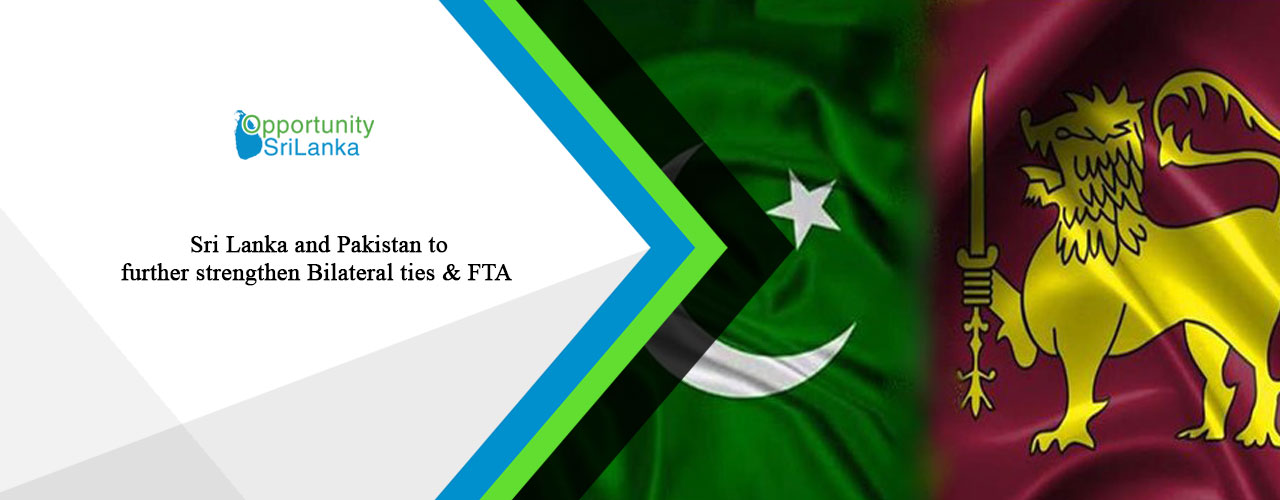
Sri Lanka and Pakistan to further strengthen Bilateral ties & FTA


Pakistani Foreign Minister Makhdoom Shah Mahmood Qureshi met his Sri Lankan counterpart Foreign Minister Dinesh Gunawardena, yesterday and called for the reinforcement of the Free Trade Agreement between Pakistan and Sri Lanka (FTAP). Qureshi, on a two-day visit, met on Monday with the president and the prime minister. He addressed increasing bilateral relations during his meeting with Minister Gunawardena to diversify and expand critical sectors, according to a media release from the Ministry of Foreign Affairs (MFA).
He said Pakistan looks forward to working with Sri Lanka with great enthusiasm, inviting the minister to visit the country soon. Foreign Minister Gunawardena, Foreign Minister Secretary Ravinatha Aryasinha, and senior officials at the Ministry met with the visiting Pakistani delegation headed by Qureshi. He commended the efforts of the Sri Lankan government to strengthen defence cooperation and looked forward to further sharing of intelligence to help each other as committed neighbours.
While calling on both countries to strengthen the current FTA, the visiting Foreign Minister pointed out that Sri Lanka has not ultimately used its $200 million credit line with Pakistan. Qureshi invited Sri Lanka to take advantage of the opportunity, particularly in the area of animal husbandry, a move that he believed would benefit Sri Lanka. He also requested that the business sector in Sri Lanka visit Pakistan and establish connexions with appropriate counterparts in Pakistan, and claimed that Minister Gunawardena initiate a program to that effect.
Minister Gunawardena informed his counterpart that, in addition to the growing bilateral economic partnership, Sri Lanka is committed to continuing its partnership with Pakistan in all possible areas of cooperation, and looked forward to engaging in tourism and higher education. Minister Qureshi also invited a delegation of Sri Lankan Buddhist clergy to visit Pakistan and witness the beautiful religious sites of Buddhism, and to travel the country to strengthen the growing cultural relationships.
OSL Take: Sri Lanka already has a free trade agreement (FTA) with Pakistan, and the continued assistance would help build investment opportunities in various sectors.
The move to further strengthen bilateral relations between Sri Lanka and Pakistan as well as the redoubling of trade promotions to invigorate efforts to reach the target of US$ 1 billion trade by 2020 are indications of the island nation becoming a hot spot for those looking at entering the Pakistan market using the facilities available in the Pakistan–Sri Lanka Free Trade Agreement.
VBS/AT/10022020/Z_TB2

Sri Lanka Airlines is the 'World’s Leading Airline to the Indian Ocean’


SriLankan Airlines, Sri Lanka's National Carrier and a member of the Oneworld alliance, has once again won the prestigious title of ' World's Leading Airline to the Indian Ocean ' at the World Travel Awards Grand Final Ceremony in Muscat, Oman. Also nominated was the airline for the titles ' World's Leading Airline, ' ' World's Leading Airline-Business Class, ' ' World's Leading Airline – Economy ' and ' World's Leading Cultural Airline. '

Chief Executive Vipula Gunatilleka of SriLankan Airlines said, "This award reaffirms the success of our consistent efforts to consolidate the Indian Ocean region. Our expansion activities are compliant with market demands, and in the coming months, we expect a few more connectivity additions. Our global connectivity across other central regions has always made us a popular choice for travelling via our Colombo hub to and from the Indian Subcontinent.
Since 2016, the airline has been defending the coveted title, and at the WTA Asia Oceania ceremony in October this year, the airline won the title of ' Asia's Leading Airline to the Indian Ocean. ' The award demonstrates the presence of SriLankan in the South Asian region, strongly supported by its connectivity of 124 weekly flights to and from 11 Indian cities. The Maldives was the extended home market of Sri Lanka with 21 flights a week connecting to Malé, facilitating leisure seekers from its extensive network of Middle East, Europe, Far East, and Australia. SriLankan also developed the first airline to connect South Maldives ' Gan Island with the world, making it the only airline operating in the Maldives from two points.
Air Austral, Air France, Air India, were the other contestants to the award. Oneworld alliance, data, JW Marriot, Changi Global Airport, Hilton London Heathrow Airport, England, Bear Grylls Survival Academy, Armani Dubai, United Arab Emirates, Atlantis The Palm, Dubai, UAE, and Star Clippers were the other winners.
The World Travel Awards, celebrating this year's 26th anniversary, was established in 1993 to recognise, reward and celebrate excellence across all essential travel, tourism and hospitality sectors. Today the brand of the World Travel Awards is globally recognised as the ultimate hallmark of excellence in the industry. In 2019, the World Travel Awards Grand Tour featured regional gala ceremonies in North America and the Caribbean (Jamaica), Middle East (Abu Dhabi, UAE), Africa & the Indian Ocean (Mauritius), Europe (Madeira, Portugal), Latin America (La Paz, Bolivia) and Asia & Oceania (Phu Quoc, Vietnam).
OSL Take:  Sri Lanka’s airport and aviation industry are currently undergoing a facelift with the government of Sri Lanka, giving prominence to the development and upliftment of the country’s airports, including the main international airport in the island. Sri Lanka’s national carrier is also undergoing a restructuring program. The airline is also on the lookout for a foreign investor to form a joint venture operation for the airline. Sri Lanka’s geographical positioning in the Indian Ocean region, the ease of doing business environment, and the strong trade ties with foreign nations have made Sri Lanka the ideal business destination in the South Asian region. All this indicates the growing business/investment potential in Sri Lanka’s airport and aviation industry.
VBS/AT/10022020/Z_TB1

Wednesday, February 5, 2020

Sri Laka's premier representative of the private sector optimistic that recent tax revisions will stimulate growth


As the premier voice of the private sector, the Ceylon Chamber says it is hopeful that the government's announced tax and levy revisions will stimulate the economy. As part of the stimulus package, the slew of tax proposals put forward will stimulate short-term economic growth and development, the Chamber said in a statement.

"We hope that recent government announcements to limit non-priority public spending and a restricted approach to ministerial portfolios reflect the extent of government efforts to control fiscal deficits," it said. The Chamber welcomed the focus on improving the profitability of state-owned enterprises (SOEs), starting with setting up a committee to select competent leadership for these state institutions.
A key recommendation within the Sri Lankan Economic Acceleration Framework (SEAF) 2020-25 of the Ceylon Chamber was to apply best practice management and financial discipline to SoEs. The Chamber expressed hope that medium- and long-term sustainability of the positive benefits accrued from the near-term fiscal stimulus. It will entail policy attention on pursuing progressive reforms on many main agendas, including but not limited to those related to local and foreign investment, increasing exports, and improving public sector productivity.
The Chamber is also looking forward, as sponsored in its SLEAF, to an environment of policy consistency and evidence-based decision-making that will provide a basis for accelerating sustainable growth. As the leading representative of the private sector, the Ceylon Chamber looks forward to continued engagement with the government to maximise the translation of economic stimulus measures into accelerated growth and comprehensive benefits for all segments of citizens and businesses.
OSL Take: The Ceylon Chamber of Commerce has also noted that new urbanization initiatives with new opportunities for investment have open doors to gauge the business/investment opportunities in Sri Lanka. The government of Sri Lanka is engaged in an aggressive development program urbanisation and the continuous progress in developing the ease of doing business environment in the country has expanded the business/investment opportunities in key economic sectors. The country’s geographical positioning in the Indian Ocean and the many trade agreements, as well as trade concessions enjoyed by Sri Lanka, have made the country a business hub in the South Asian region.
VBS/AT/05022020/Z_TB5

Japan provides $1 Million grant for Sri Lanka


The Government of Japan supported the Mines Advisory Group (MAG) for humanitarian demining activities in Northern Sri Lanka with a total sum of US$ 635,420 (approx. Rs. 110 million), the Japanese Embassy reported.

At the Ambassador's Residence in Colombo on 28 November 2019, Japanese Ambassador to Sri Lanka Akira Sugiyama and MAG Country Manager Valentina Stivanello signed the grant agreement.
The agreement follows two other grants from the Japanese government for a similar purpose in October this year – to promote and encourage the relocation and rehabilitation of farming and other livelihood activities for internally displaced persons (IDPs).
Experts predict that this project will continue the ongoing mine clearance in the northern region and contribute directly or indirectly to livelihood improvements for over 2,000 families in the districts of Mannar and Vavuniya.
Since 2003, Japan has been a significant donor in Sri Lanka in the field of mine clearance to help the nation to be mine-free by 2020. More than US$ 36 million in assistance was rendered towards this cause through its Grant Assistance for Grassroots Human Security Project (GGP).
Therefore, this project will contribute to the efforts of the Sri Lankan government to ensure safe mine-contaminated areas, facilitate the resettlement of displaced people and enhance their livelihoods in the northern region, especially in the districts of Mannar and Vavuniya.
OSL Take: The statement by Japanese Ambassador to Sri Lanka is indicative of the success recorded by foreign investors who have set up businesses based in Sri Lanka. It is also indicative of the opportunities to engage in companies as well as the availability of skilled labor in the country.
Sri Lankan government has also taken many steps to improve the ease of doing business environment in the country and has made massive progress in infrastructure development as well.
Sri Lanka’s geographical positioning, along with the many trade agreements and trade concessions enjoyed by the country, makes it an attractive business destination.
Therefore, foreign businesses/investors could explore setting up businesses in Sri Lanka as the base for the South Asian region.
Finally, we see a Japanese big fish taking to the “investment waters of Sri Lanka.”
Now the “eyes” of the international investment figureheads and pundits will stretch with anticipation about the investment potential of Sri Lanka.
OSL has been upbeat about the country’s potential.
However, many still went on the “wait and see policy” to take part in the country’s all sector boom. The boom was spearheaded by the USD 44 billion Western Region Megapolis Masterplan (WRMM) aimed at making Colombo a dominant trading-hub by 2030.
So, any party willing to consider Sri Lanka as a worthwhile investment destination could now consult the biz-friendly OSL Team for a country overview and the smart-investment-way forward with our local expertise and active links.
VBS/AT/05022020/Z_TB4                                                  

HSBC, IUCN to conduct a study on the Sri Lanka apparel sector


HSBC Sri Lanka, in partnership with the International Union for Nature Conservation (IUCN), has launched a survey to plan greener processes in the apparel industry.

The survey will be focusing on small and medium-sized producers, officials said.
"The apparel industry is a vital income earner for Sri Lanka, and supporting its shift to greener development is crucial for the industry's growth and long-term stability," said Mark Prothero, Chief Executive of HSBC Sri Lanka and Maldives.
"HSBC is moving beyond transactional corporate social responsibility with this project to a more knowledge-based contribution that benefits communities, the environment, and the country as a whole."
"And hopefully the result of this study will be a strategic guide on how small and medium-sized apparel producers can reduce their carbon footprint by becoming greener and more sustainable," he said.
The apparel industry in Sri Lanka is by far the largest export earning industry with sales of US$ 5 billion and has a significant environmental impact. To achieve sustainability, the more substantial industry players have transformed over the years into greener manufacturing methods. Sri Lanka's Chief Financial Officer, Brandix Lanka Limited, Suchitra Surendranath, representing the Joint Apparel Association Forum (JAAF), spoke at the event describing Brandix's steps to create Sri Lanka's first ' net zero carbon ' factory in Batticaloa.
"Typically, 44 percent of power is used for air conditioning in a garment factory," he said. "For example, magnetic bearing chillers could save up to 42 percent of that consumption as compared to rotary chillers."
He further commented, saying, "Replacing conventional LED lighting, gripping servo motor motors, and installing biomass boilers instead of gas boilers are a few steps you might take to create greener garment.”
Sustainable investment has the potential to contribute to several UN Sustainable Development Goals (SDGs) in the fashion and clothing industry. These include providing and maintaining water and sanitation, building robust infrastructure, inclusive and sustainable industrialization and development, integrated, healthy, stable and sustainable communities and human settlements, and fighting climate change and its impacts.
IUCN Country Representative Ananda Mallawatantri said that the strategy would be implemented with the assistance of industry and government officials from organizations such as JAAF, the National Cleaner Production Center (NCPC), and the Investment Board (BOI).
"The consultations envisaged during the development of the strategy will include regulatory agencies, senior managers of the apparel industry and technical staff, environmental auditors who are familiar with the operations and processes of the industry," he said.
OSL Take: The statement by HSBC on Sri Lanka’s apparel industry experts is a clear indication of the continuously growing business/investment opportunities in the country’s apparel exports sector. The growth in sales recorded by Sri Lanka’s multinational textile manufacturer shows the business potential in Sri Lanka’s apparel manufacturing and export sector.
Sri Lanka enjoys the GSP Plus trade concession from the EU and the US GSP facility, which provides added incentives to local manufacturers and exporters. Relationships with fresh clients will diversify the export industry that is needed because of U.S. import dependency. This emphasis will also be here to create long-term relationships with global brands that can enhance the apparel sector. The need to capitalize on automation and the target of US$ 6 billion in apparel export earnings is a beckoning call for foreign businesses/investors to explore business/investment opportunities in Sri Lanka.
VBS/AT/05022020/Z_TB3

Financial research and analytics giant Acuity Partners to invest in Sri Lanka


Acuity Knowledge Partners (formerly a Moodys Corporation subsidiary) are new owners of research and analytics companies. They are committed to expanding their operations in Sri Lanka and believe it is the fastest-growing location among their international distribution centers.

Moody's Analytics Knowledge Services (formerly Amba Research) announced their rebranding as Acuity Knowledge Partners last month. It followed a management buyout from Moody's Corporation, backed by Equistone Partners Europe Ltd. (Equistone), European mid-market private equity investor.
Acuity is a leading provider of customized research, analytics, and automation technology for the financial services industry. Established in Sri Lanka in 2003, Acuity has offices in the United Kingdom, the United States, India, Costa Rica, and China.
The Investment Director of Equistone, Richard Briault, and Partner of Equistone, Tim Swales, were in Sri Lanka, to announce the new ownership and branding. Acuity CEO and Director Robert King joined them.
Acuity has a broad client base of more than 300 financial services firms in fields such as investment banking, investment management, private equity, advisory, and commercial lending. It hires more than 2,500 professional analysts worldwide, with Sri Lanka comprising around 10% of them. In July this year, while Acuity revealed the change in ownership, the company posted a third-quarter record. "We are pleased that the market responded to the announcement positively. Customers respect our quality and experience," Robert said.
"Our staff knows we have a strong supporter in Equistone, and the company is doing well, and we're investing in Sri Lanka. We opened new distribution facilities which this year will lead to an increase in numbers of 20 percent. Next year we are expecting similar growth. Sri Lanka is going to be our fastest-growing site, "Robert announced.  Together with Equistone, Robert, as CEO and co-investor, acknowledged and included the tenured analyst pool of Acuity in the ownership structure. The analysts are its most significant resource, representing more than 300 of the top financial corporations in the world. "As an employee from day one, I can tell this movie has had a tremendous impact on motivation," said Chanakya.
Robert was emphatic that Acuity aims to be the global financial services sector's # 1 marine research and analytics partner. "We believe we are the biggest and leading player, and we want to grow stronger and stronger." He said it was equally important to continue creating an excellent business for customers and an exceptional workplace for workers, where they have career opportunities and a committed and supportive management team that will invest in further development and learning.
OSL Take: The decision to expand in Sri Lanka is an expression of confidence in Sri Lanka’s economy and growth. These words encapsulate the importance of Sri Lanka in the Indian Ocean region and would undoubtedly provide many reasons for foreign businesses/investors to explore opportunities in the island nation.
As pointed out by the research company, Sri Lanka has shown excellent signs of returning to normalcy following the Easter Sunday attacks. Also, the resilience shown by the island when faced with adverse situations has increased business/investor confidence in Sri Lanka. Therefore, foreign businesses/investors could explore business/investment opportunities in Sri Lanka.
VBS/AT/05022020/Z_TB2

An analysis of State-Owned-Enterprises (SOEs) in Sri Lanka

Today, airports, ports, roads, power plants, railways, etc. are operating around the world through private sector and public-private partnerships.
When traveling abroad, Sri Lankans don't think twice.
The same holds when they fly on private airlines, land in private airports, go on private toll roads or get their electricity from individual power plants.
However, over the 70 years since independence, the leaders of Sri Lanka have not dared to emulate this global phenomenon locally. Neither have our private sector leaders had the vision or drive.
The Pathfinder Foundation launched a table of underused government assets in 2015. The launch of which came with the election of the 'Yahapalanaya' government, whose sentiments were that these assets should be sold to private investors or opened up to private-public partnerships.
The sale of these assets was to both raise government revenue and, more importantly, kick-start a moribund economy.
Since these recommendations were not notified by either the then government or the private sector, the Pathfinder Foundation again presents this table, entitled 'Broad-based SOEs: Increasing efficiency, debt reduction, and revenue generation,' in the hope that this proposal will be considered by the new government when formulating policy and that these proposals will be included in their lobbying initiatives by the private sector.
There are 422 government-owned enterprises (SOEs) in Sri Lanka, contributing 13 percent of GDP, based on the currently available data. Nonetheless, for various reasons, including legal definition, the exact number of SOEs is open to question. Fifty-four classify as strategic state-owned enterprises (SOEs) out of this number. These SOBEs' total asset base stood at Rs. 7.6 trillion by the end of 2017, 57 percent of GDP.
All SOBEs' total net profit amounted to an Rs. 27 billion loss in 2018. There were 17 SOBEs, which incurred aggregate losses of Rs — 158 billion, which outstripped others' aggregate income. The profits were reported primarily from government-owned banks and non-bank financial institutions as well as trust funds. Ceylon Petroleum Corporation (Rs. 104bn), Ceylon Electricity Board (Rs. 30bn), and SriLankan Airlines (Rs. 17bn) reported the most significant loss. The government also collected Rs. 37bn as levy income and Rs. 4.6bn as SOBE dividends.

OSL Take:
The new amendment to foreign exchange legislation enabling Sri Lanka’s state-owned enterprises to borrow monies from external sources would result in the expansion of operations in many state-owned enterprises.
The latter would invite more open as well as direct transactions between foreign business/financial institutions and Sri Lankan state-owned enterprises.
Once the government introduces the reforms to SOEs, it will make them less risky for private investment. The reforms, coupled with the GoSL’s stance on promoting PPPs, will contribute to more profitable public-private partnerships (PPPs) signed on concerning SOEs. Therefore, foreign businesses could explore opportunities for trade with Sri Lankan state-owned enterprises.
VBS/AT/05022020/Z_TB1